For Developer Land Teams: Why You're Losing First-Refusal Sites to the Promoters You Used to Buy From
The conversation no developer land director wants to have, with the promoter who got to your landowner three months before you did. Why the first-refusal economy has flipped.
5 min
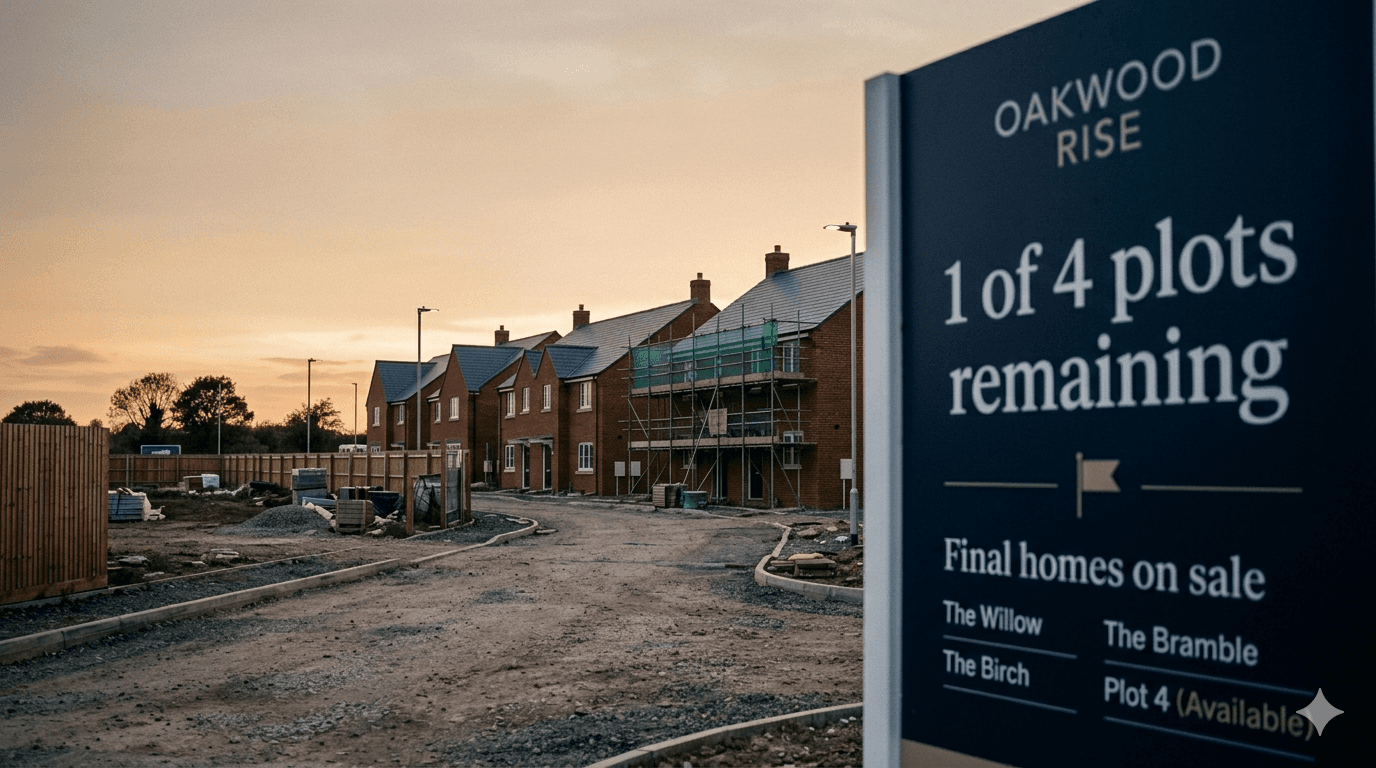
The conversation you don't want to have, and have probably had recently, goes like this.
You're at an industry dinner. A landowner you've spoken to twice a year for the last decade casually mentions he's just signed an option agreement on his farm.
You ask, as politely as you can manage, with whom.
It's a promoter. A six-person outfit you'd half-noticed at LPDF events. They got to him three months ago.
He looks slightly embarrassed. You look composed. The site you'd half-expected to come to you first is now going to be optioned, promoted through the planning system, and sold back to a developer in eighteen months at a price that includes the promoter's margin.
It might even be sold back to you.
The first-refusal economy has collapsed
For most of this industry's history, developers held the high ground on landowner relationships. Capital, certainty of build-out, brand recognition, a regional sales presence. These were structural advantages that meant strategic landowners came to developers first, and the lean land promoters waited their turn or worked the sites developers wouldn't touch.
That economy worked because the developer land team had time on its side. A landowner who valued the relationship would wait six months for an internal land committee to make a decision. The promoters couldn't move much faster than the developers anyway. Speed wasn't a meaningful differentiator.
It is now. Over the last five years, without much industry comment, the speed differential has flipped. And it's flipped against developers.
Why developer land teams are particularly exposed
Three structural things make a developer land team slower than the promoter who used to wait politely behind it.
The first is governance. A developer's land acquisition runs through internal committees, group viability reviews, regional and national approval cycles. That structure is the cost of running a multi-billion-pound business prudently, and it adds weeks of friction the promoter doesn't carry.
The second is breadth. A developer land team is responsible for every kind of opportunity: short-term consented sites, strategic land, regeneration plays, urban infill, partnership deals, joint ventures. A pure-play promoter does one thing: source, secure and promote strategic land. The promoter's whole organisation is engineered around speed in that one workflow. The developer's land team is one of seventeen things the business is doing well.
The third has changed in the last few years, and it's the one most developer land teams haven't fully clocked. The promoters have been investing in tooling, specifically in compressing the input-gathering layer of land sourcing, the part where someone has to spend an afternoon pulling planning history, ownership data, comparable evidence and consultant notes before any judgement happens. The fastest promoters now do that part in twenty minutes. Many developer land teams still do it in half a day.
Twenty minutes versus half a day, repeated across a hundred sites a year, is the whole competitive gap. The problem is leverage. Hiring can't close it.
What it costs you
The cost compounds: you lose the site, then you pay for it anyway, twice over.
First when you watch a strategic site you'd been tracking for months get tied up under option by a firm you'd never have considered a competitor. Second when, eighteen months later, that same site is offered back to you with planning permission attached and the promoter's margin priced in.
You bought the site. You just bought it for a premium you wouldn't have paid if your land team had moved three months earlier. And the landowner, your relationship, chose someone else to walk the planning journey with him, because the someone else replied faster.
Multiply that across a portfolio across a year. The number isn't small.
The honest diagnosis
When this happens, the instinct in most developer land teams is to point at governance. "We'd have moved if the committee had moved." Sometimes that's fair. Often it isn't.
The committee got the paper too late, and got it half-built, because the land team's input-gathering phase ate two weeks before anyone could put a recommendation together. By the time governance saw the deal, the deal was already lost. The promoter, working with a tighter team and better tooling, had the recommendation drafted on day three and the option signed on day twenty.
Governance is the constraint you can't easily change. The input layer is the one you can.
What the fastest developer land teams are now doing
The developer land teams holding their ground against the promoter encroachment have made one specific change. They've stopped letting their best people spend their best hours on input-gathering.
Their first-pass appraisals begin at the point of judgement, with the data collection already done. Their landowner approach tracking is current to the day, kept up between meetings instead of reconstructed before them. Their planning monitoring runs in the background. Their pipeline is true, which means their internal governance can move on real information rather than estimates.
They haven't hired more people. They couldn't, even if they wanted to, because developer land team headcount has been broadly flat across the industry. What they've done is concentrated the time their existing people spend on each site on the parts that actually require judgement.
We've been building exactly the system that enables this. It's called Harold, a property-trained workflow layer configured around your firm's own sites, pipeline and documents. It lets a developer land team start every workflow at the point where the work begins, sitting inside the tools your team already uses.
What to do about it
If "the landowner who signed an option with someone else" is a conversation you've had recently, or that you can feel coming, book a 30-minute walkthrough and bring one strategic site you're currently tracking. We'll show you, on your own opportunity, what it looks like when the input-gathering phase takes twenty minutes instead of two weeks.
The promoter who got there before you was faster on the part nobody talks about. The input layer takes them twenty minutes. That part is now fixable for you too.

Article written by